On Probation? How to Use an EtG Calculator Without Fooling Yourself
It's 3 AM on a Sunday. You drank last night. Your next test is Tuesday morning. You're not reading this because you're curious about alcohol metabolism. You're reading this because you need to know if your life is about to fall apart.
Editorial note
This educational page is maintained by EtGCalc and reviewed against published EtG research, SAMHSA guidance, and our calculator methodology. It does not provide medical or legal advice.
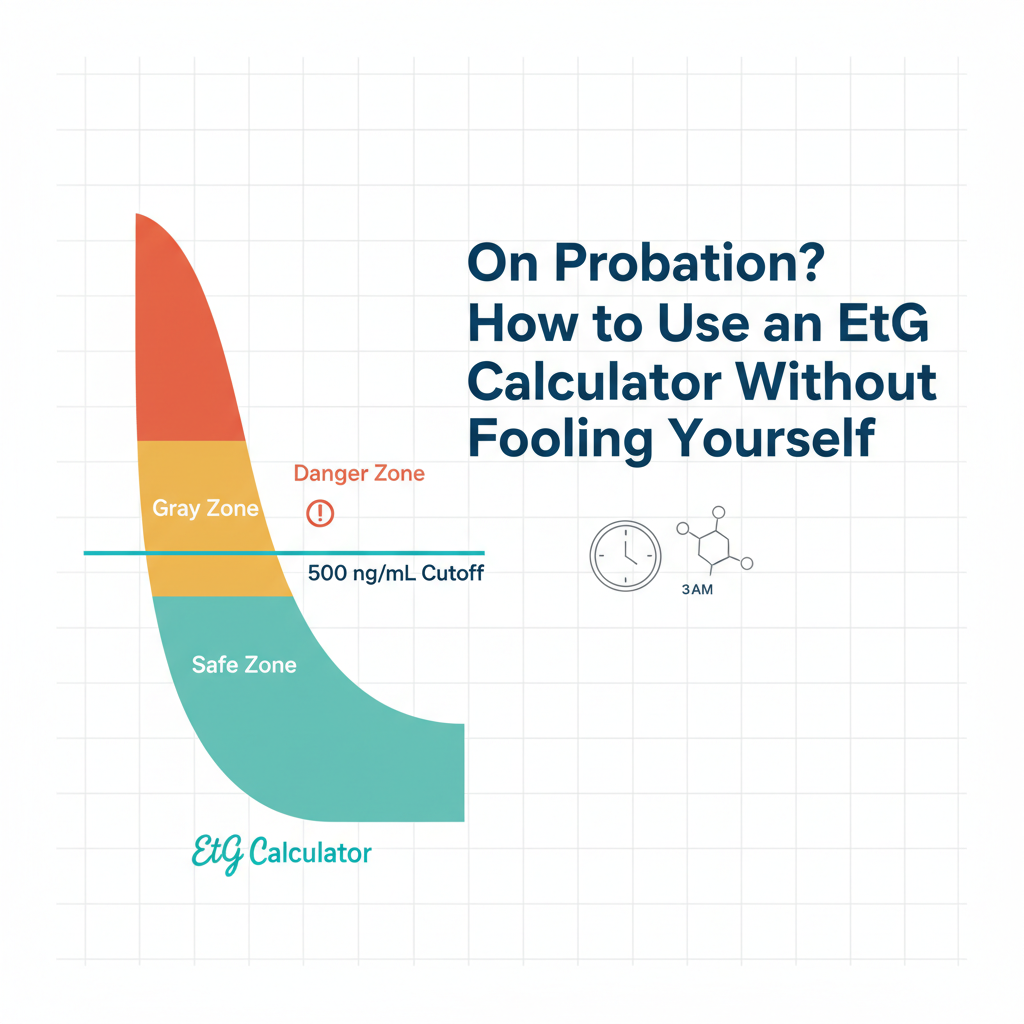
An EtG calculator is not a crystal ball. It will not tell you whether you'll pass. What it does is model how your body processes alcohol — estimating blood alcohol concentration through the Widmark formula, then projecting how much EtG likely remains in your system.
What the Calculator Actually Does
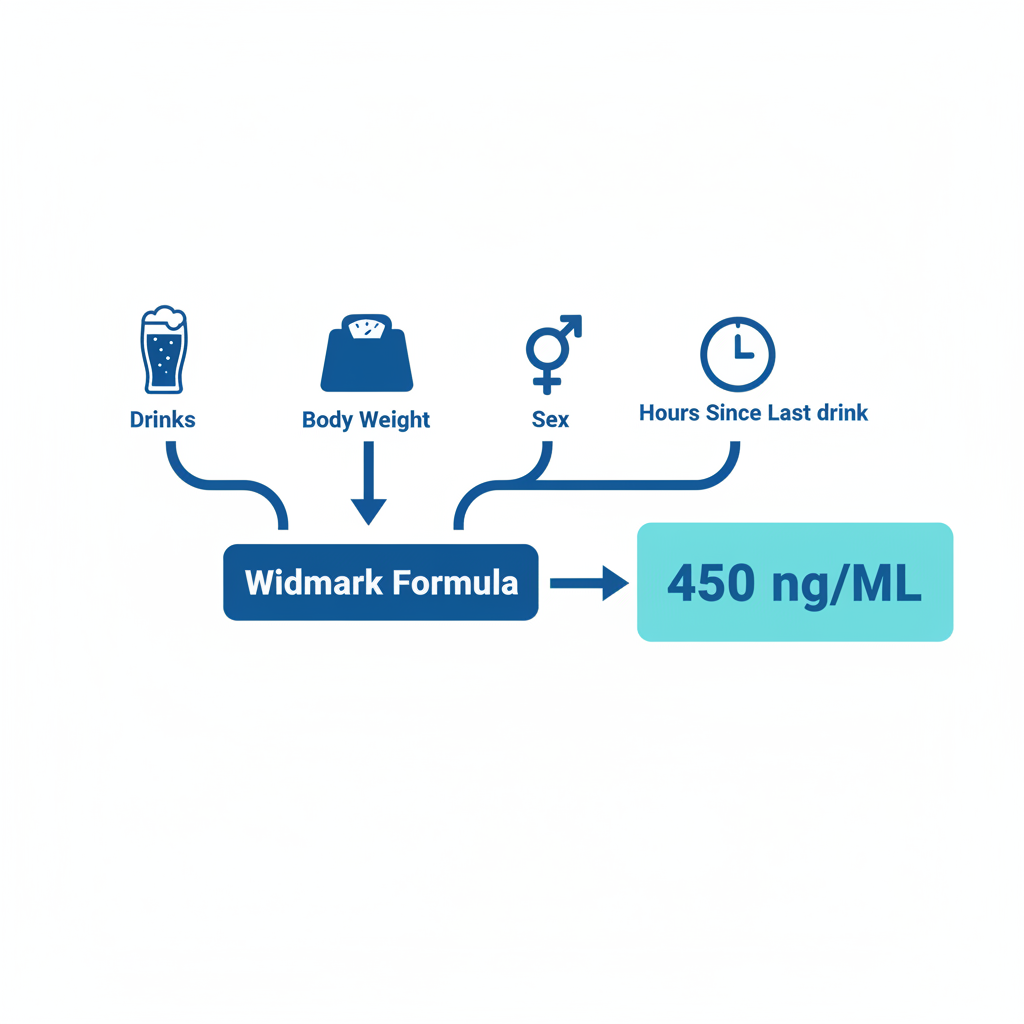
When you enter your drinks, body weight, sex, and hours since your last drink, the calculator estimates your current EtG concentration in nanograms per milliliter (ng/mL).
It does not account for your liver function. It does not know if you're dehydrated. It cannot factor in medications that slow metabolism. It runs on population averages, not your specific biology. Understanding this is key — learn more about the formula in our EtG calculation guide.
The Number Most People Get Wrong
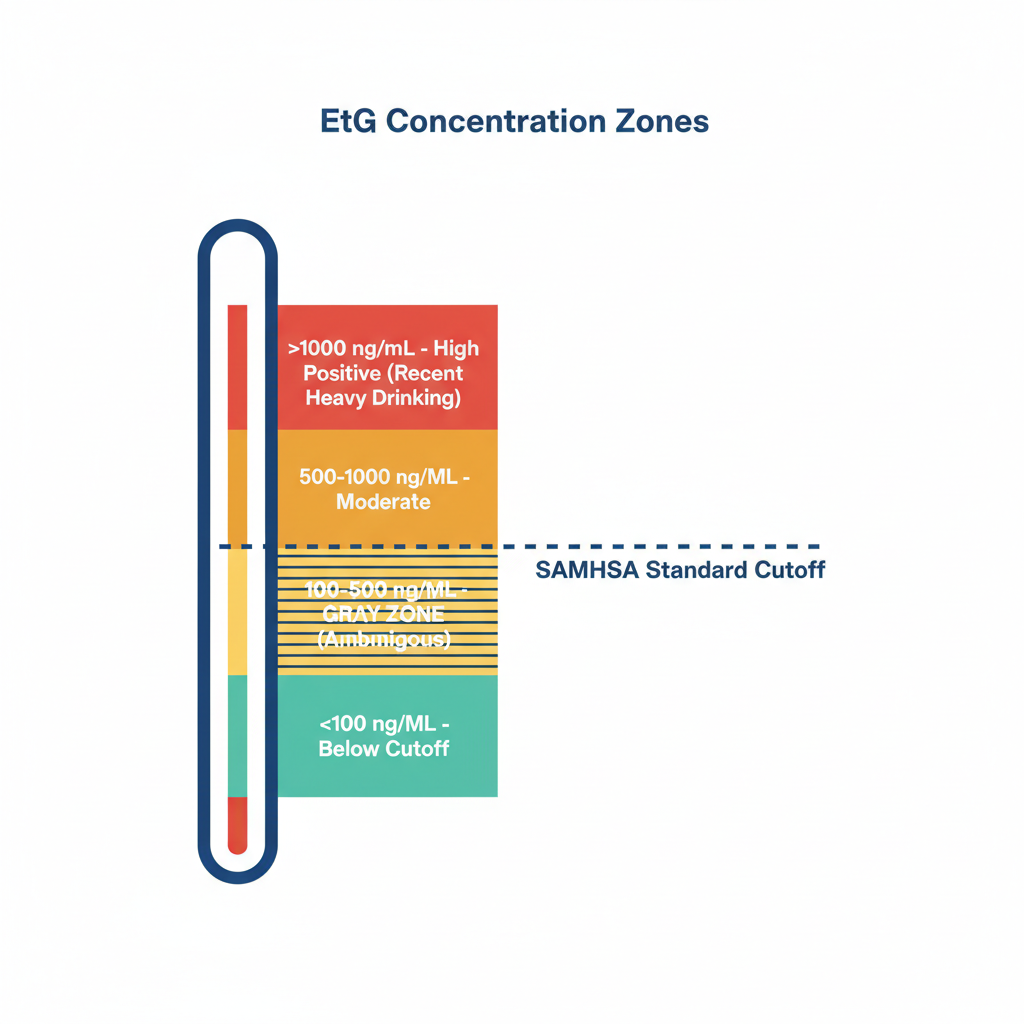
Not all positive results carry the same weight.
Above 1,000 ng/mL
Generally indicates recent, heavy drinking. SAMHSA classifies this as consistent with heavy use. Very little room for ambiguity.
Between 100-500 ng/mL
The "gray zone." Could mean light drinking 24-36 hours ago, residual EtG from 3 days prior, or even incidental exposure. This is where you have options.
The Weapon You Didn't Know You Had
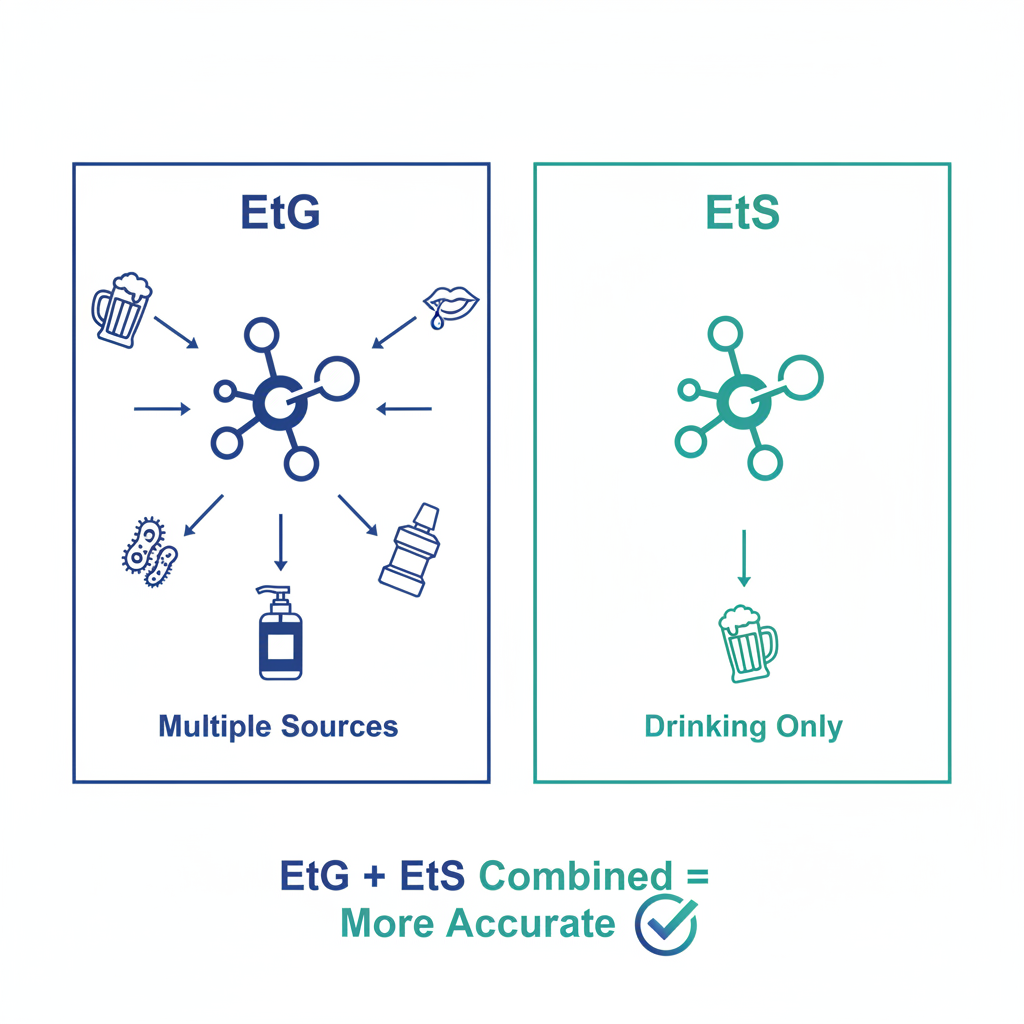
EtG has a companion metabolite called EtS (ethyl sulfate). Unlike EtG, EtS is almost never produced outside the body. It doesn't come from hand sanitizer. It doesn't come from bacteria in the sample.
If your EtG is 280 ng/mL but your EtS is negative, you have a scientifically grounded basis to request further evaluation. You're not saying "I swear I didn't drink." You're saying: "The data suggests this may be residual or environmental. I'm requesting confirmatory testing."
Most people on probation don't know EtS exists. Now you do. For the full comparison, read our EtG vs EtS biomarkers article.
Why the Calculator's Limits Are Your Most Important Lesson
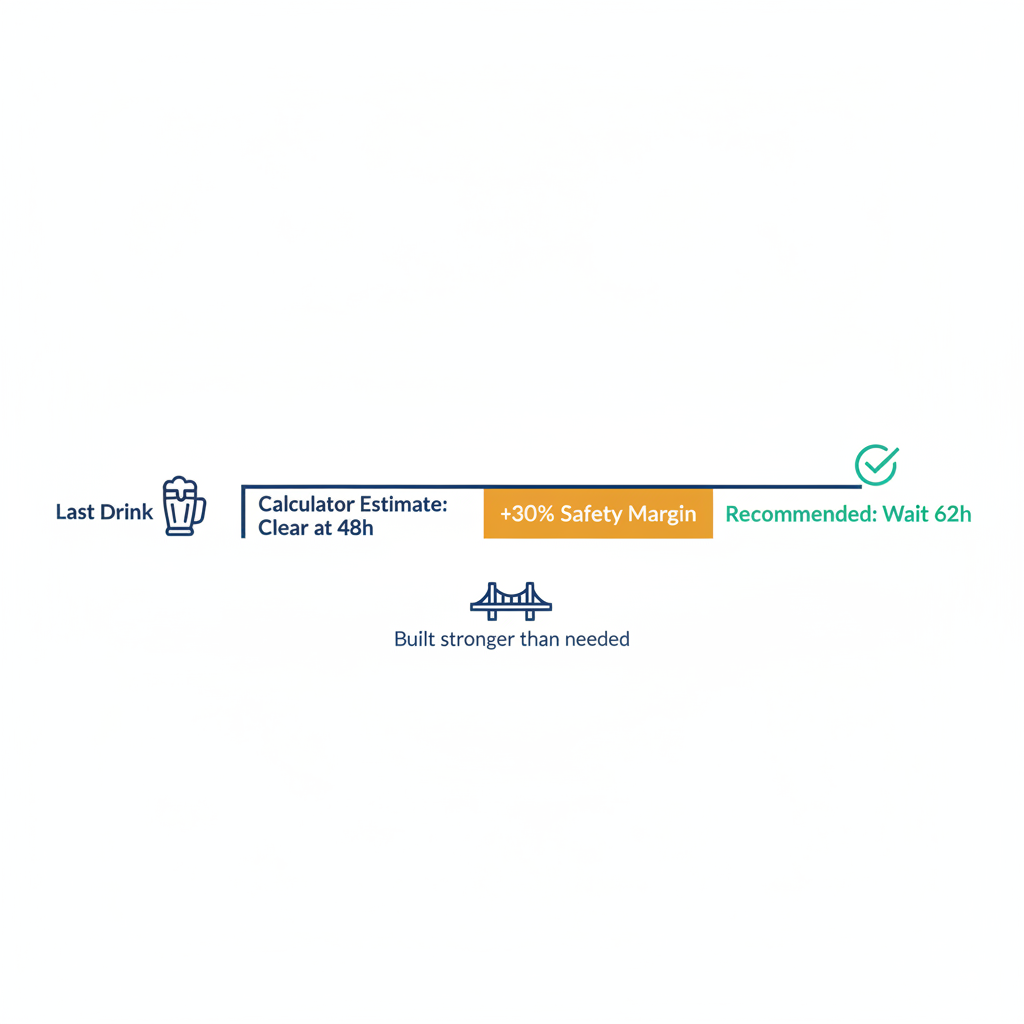
The calculator uses average elimination rates. But individual metabolism varies significantly. Published research reports EtG elimination half-lives ranging from approximately 2 to over 3.5 hours. One person could take nearly twice as long as another to clear the same amount.
The 30% Safety Margin Rule
Calculator says 48 hours to clear → Wait 62 hours
Calculator says 60 hours to clear → Wait 78 hours
This is not being paranoid. This is building what engineers call a safety margin. Every bridge is designed to handle far more weight than it will ever carry.
What This Actually Gives You
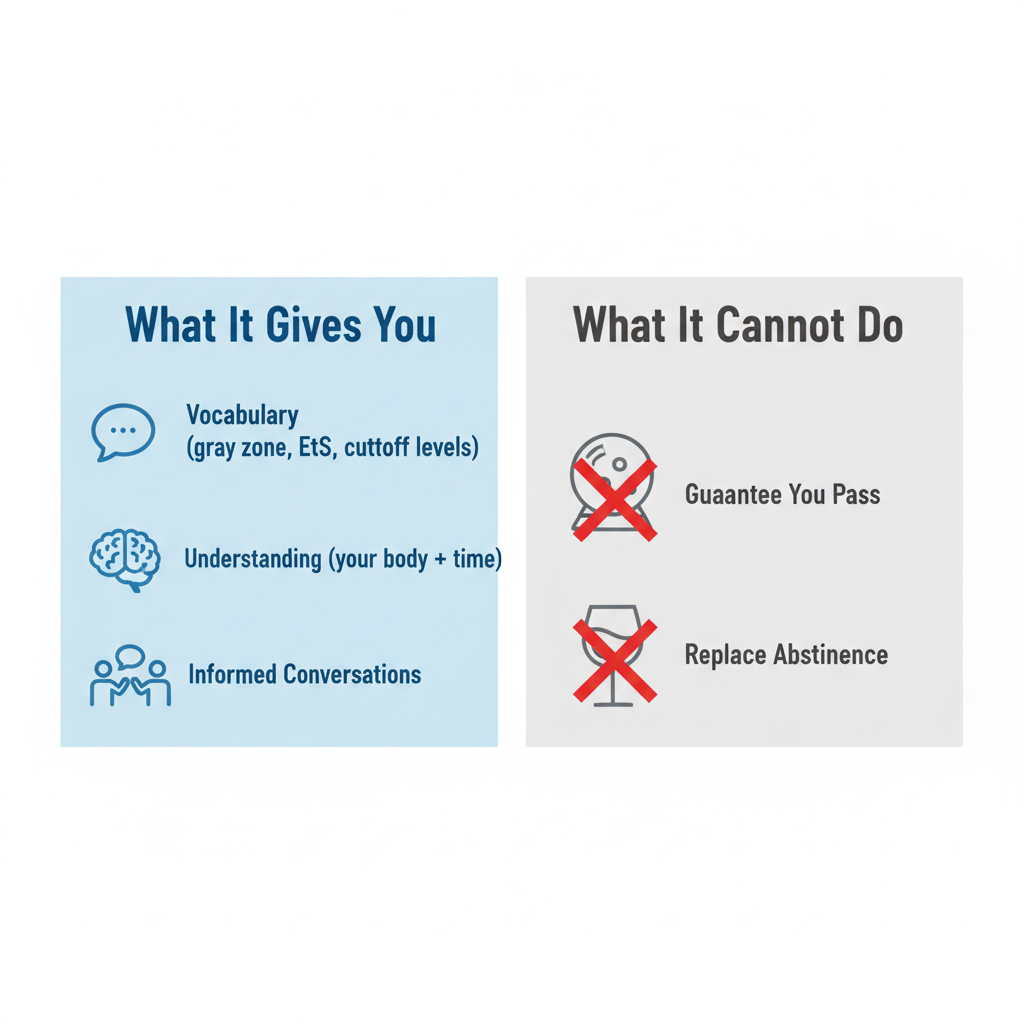
The calculator helps you understand the relationship between your drinking, your body, and the clock. It gives you vocabulary — the difference between 150 ng/mL and 1,500 ng/mL, the existence of EtS confirmation, what "gray zone" means in toxicology.
"Were you looking for a number that would let you sleep tonight? Or were you looking for a way to stop ending up at 3 AM, staring at a screen, wondering if your life is about to change?"
The calculator can help with the first question. Only you can answer the second.
Frequently Asked Questions
Can an EtG calculator tell me if I will pass my probation test?
No. An EtG calculator provides estimates based on population averages and the Widmark formula. It does not account for individual liver function, hydration, medications, or other factors. It should be used for understanding, not as a guarantee.
What does a low positive EtG result (100-500 ng/mL) mean for probation?
A result between 100-500 ng/mL falls in the "gray zone." It could indicate light drinking 24-36 hours ago, residual EtG from 3 days prior, or potentially incidental exposure. If your result falls in this range, ask about EtS confirmation testing.
What is EtS and how does it help with probation testing?
EtS (Ethyl Sulfate) is a companion metabolite that is almost never produced outside the body. When tested together with EtG, results can better distinguish between actual drinking and incidental exposure. Learn more in our 100 ng/mL cutoff guide.
What is the 30% safety margin rule for EtG testing?
Because individual metabolism varies (half-lives range from 2 to 3.5+ hours), you should add at least 30% to whatever time estimate a calculator gives you. If it says 48 hours to clear, wait 62 hours. This builds in a safety margin for biological variability.
Disclaimer: This article is for educational purposes only. EtG Calculator provides estimates based on alcohol metabolism modeling using the Widmark formula and published EtG pharmacokinetic data. Results are not guaranteed and should not be used as legal advice. Individual metabolism varies significantly. If you are on probation, the safest course of action is complete abstinence from alcohol.
References: SAMHSA (2012); Halter et al. (2008); Hoiseth et al. (2010); Wojcik & Hawthorne (2007).
Related Reading
Try our free EtG Calculator for a realistic estimate, not a generic chart.
Medical & Legal Disclaimer
Not Medical Advice
EtGCalc does not provide diagnosis, treatment, or medical advice. Talk with a qualified healthcare provider about alcohol use, metabolism, testing concerns, or recovery.
Not Legal Advice
EtG testing can affect probation, custody, licensing, and employment decisions. Consult a licensed attorney or your testing program for legal questions.
If You Need Support
In the United States, SAMHSA's National Helpline is 1-800-662-4357. It is free, confidential, and available 24/7.
Calculator output is an estimate, not a test prediction. Individual metabolism, hydration, kidney function, genetics, specimen handling, and lab cutoff policy can change real results. See our methodology and sources.
References
- 1SAMHSA. The Role of Biomarkers in the Treatment of Alcohol Use Disorders, 2012 Revision.
Used for biomarker context, cutoff interpretation, and incidental exposure cautions.
- 2Jatlow et al. Ethyl glucuronide and ethyl sulfate assays in clinical trials, 2014.
Used for urinary EtG and EtS kinetics after alcohol exposure.
- 3McDonell et al. Using ethyl glucuronide in urine to detect alcohol use, 2015.
Used for EtG detection window context in clinical monitoring populations.
Get Your Estimate Now
100% Private. No data saved. Runs entirely in your browser.
Open Calculator